Maasai Steppe Warrior for Wildlife Elvis Kisimir Speaks Up for Lions
“In a few years to come, the world will only see the rare lion spoor on the sandy soil. If the wind blows, then even those spoor will go.” One extraordinary Maasai warrior shares his message for the world about the future of big cats. Elvis Kisimir experiences the full extent of familial responsibility while pursuing a career in wildlife in a story about how early exposure ignited a passion that transformed into the protection of lions and rural livelihoods in Tanzania. He tells his own tale of his metamorphosis from a young schoolboy who is scared of lions to the head of Human Wildlife Conflict Prevention for the African People and Wildlife Fund, and a Disney Conservation Hero.
My name is Elvis Kisimir. Born in Loibor Siret, and a Maasai by tribe, I love people, wildlife, and nature.
During my life I have experienced many changes in both the community and the environment that I live in. My father was a primary school teacher, and my mother was a nurse working at the health centre in the village of Emboreet who used to fly with doctors to different areas of the Maasai Steppe. When I was a young kid, sometimes if I cried, my mother would tell me, “Stop crying because the lions are behind the house.” I would stop crying immediately because I thought the lions might break into the house and take me. At that time the lions were very many, and I would hear them roaring almost every day: in the evening, at night, even early in the morning. When I met with friends to play together we always asked each other if everyone had heard the lions roaring in the night.
In 1991, my father stopped working as a primary school teacher. He took some courses on tourism and was employed as a tour guide at one of the companies in Arusha. During that time he worked very hard because he liked his new job, so I would see him a few times a year at most. I started boarding school at Simanjiro Primary School in Emboreet, and some days I would see him, in a big tourist truck or a Land Rover, stop by the school before going on to Tarangire through the Loibor Siret ranger post.
In December of that year, when the school was closed for Christmas, my father bought us a television. Most of the movies he bought were about wildlife because he wanted to understand more about these animals, as this it related to his new job and he wanted his children to see how various wild animals lived. The two movies that I won’t forget are Masai Mara and Londolozi, and some of those images have stayed in my mind until now. In the Masai Mara film a girl was nearly killed by a lion when she went out to play tennis, but she was rescued by people from the house – this was the flashback that I had when my mother would tell me that the lions were behind the house waiting to break in and take me. I would sit close to my father and ask him many questions, so I came to understand many things concerning wildlife. When I asked about the girl in the Masai Mara film, he told me,“My son, this is not reality. We are living together with wildlife in our environment. You always hear lions roaring at night. They are not bad creatures unless you disturb them. According to our tradition, you can be harmed or even killed by lion if you are cursed by your clan. You are a man, and in a few years time you will become a warrior, son!”
I learned many things from my father — this was the starting point of my dreams. There was a hope in my life that one day I would be like him.
In 1998, my father decided to make Narakauo his main homestead, 15 kilometers from Loibor Siret centre. According to the Maasai tradition, the eldest son has the greatest responsibility in the family. I was the only son to my father, so I had to work hard to make sure the family was fine. I completed my high school education in 2006, after which I took over some of my father’s responsibilities, making it very difficult for me to go for further studies. The next year I got married, and here you can imagine that I needed to work very hard because the responsibilities were mounting in my day-to-day life.
In 2010 I was employed at the African People and Wildlife Fund heading the Human-Wildlife Conflict program for the organization, which has headquarters in Loibor Siret. I saw as the realization of my dreams because I had already created trust in the locals I worked with, which is very important to me. During the time I have been working under Dr. Laly and Charles, I have learned many things concerning wildlife and environment in general, and I want to thank them for all they have showed me by becoming a good local conservationist.
What I have found surprising and amazing in my work experience is when you find different reactions to incidents of human-wildlife conflict. You can find that 20 goats or sheep have been killed by hyenas and the owners don’t take immediate action, but if one juvenile lion has killed a single calf, immediately you find people gather together from different age groups. Everyone wants to listen, and it is a time when each person shows the rest how much he knows about lions. The lesson here I learned is this: The lion is the most important creature in the Maasai tradition.
There was one day in a conversation with Dr. Laly when she said, “If you hear lions roaring, fighting for territory, that means things are balanced: rainfall, grasses, breeding…” This idea made me think back to the time when I was around 12 years old and lions were roaring almost every day in our area, the rainfall was enough for everything that needed it to survive, and many areas were still wild, with not as much human activity as nowadays.
I have discussed this with some of the adults and elders in the communities I work in, and they agree, saying, “At that time lions were everywhere. Every year we would get enough rainfall, and we didn’t have to sell cattle to buy maize because we had a lot of milk to fill ourselves, with the livestock eating well and breeding every year.”
So my message to my fellow Maasai and the world in general:
“In a few years to come, the world will only see the rare lion spoor on the sandy soil. If the wind blows, then even those spoor will go.”
The meaning of this message is that for the small number of lions we have now, for locals and the world in general, if we are not serious about protecting them, we are going to lose all of them. Avoid conflicts with them, and don’t shrink their habitat by developing human activities in their territories. If we do that, hopefully in a few years to come the new generation will both hear and see the king of the Maasai Steppe roaring.
Lastly, if there are no lions, there are no warriors. Your lion is my lion. Let’s preserve lions for the generations and generations to come.
Read MoreKWS Ranger Killed by Poachers
A Kenya Wildlife Service ranger was killed on Monday after being caught in an ambush by poachers. The ranger was part of a team protecting rhinos at the Ol Jorgi Ranch in Laikipia North The ranger team was involved in a gun fight with a poaching gang outside the park when they were also attacked by a poaching gang that was already inside the park.
25-year-old Paul Harrison Lelesepei was shot during the gunfight and died while on the way to Nanyuki Teaching and Referral Hospital.
The poaching gangs managed to escape but officials say that there are leads which are currently being followed by investigators.
Senior Ranger Aggrey Maumo described that “One gang was inside the ranch already while another was outside. Our rangers had no information about the other gang that was inside and were caught unawares during the shootout with the other that was outside”
The Ol Jorgi Ranch has been hit a number of times by rhino poachers in recent months with 5 rhinos killed in just 6 months.
Ranger Lelesepei’s murder comes just days after the Kenyan government turned down permission for the KWS to use aerial drones in the fight against poachers.
Read MoreNamibia set to kill a third of remaining desert bull elephants
There are growing fears that Namibia is about to sell off hunting rights to a third of the remaining adult bull desert elephants in the country. With an estimated population of just over 100 elephants and just 18 of those being adult males the loss of a third of the breeding males would be devastating for the long-term viability of the famous desert elephants of Namibia.
Living in harsh conditions such as the desert has forced this population of elephants to learn new techniques to survive and this has been passed down through the generations. As the population grows smaller and the mature adults are killed the ability for the herd to maintain it’s knowledge in living in these highly stressful conditions diminishes.
While the Namibian government claims that the population is strong at over 500 elephants local conservationists believe the actual numbers are around 100 elephants. Of far more concern is the ratio between males and females. Previous hunting and poaching has reduced the breeding bull elephants to such an extent that there is now 13 females for every male elephant. This ration will grow even larger if 6 more mature bull elephants are killed in the prosed hunt later this year.
Desert living elephants are a rare group of elephants. While they are not genetically distinct from other African plains elephants they have a special herd knowledge that allows them to survive I the harsh conditions of the desert. Apart from the Namibian population the only other group of elephants with this specialist knowledge and skills can be found in Mali.
With so few elephants now with the skills and knowledge to survive in these conditions the loss of any adult elephants takes away essential skills and the ability to pass that knowledge down through the generations. The unnatural ratio of males and females also breaks down the social connections within the herd that allows the herd to survive the hard conditions.
The life of the desert elephant is harsh and the herd knowledge allows the herd to continually migrate from one watering hole to another using memory to deal with differing climate conditions.
Maintaining a viable population of mature adult bull elephants is important as juvenile male elephants leave the family group at about 12 years of age and many will attach themselves to a mature male in order to learn both practical and social skills that they will need as they come into breeding adulthood.
Namibia’s desert elephants live in the arid region of Kunene in north west Namibia. In the earlier 1900′s there were as many as 3,000 elephants in the desert herds.
Prior to the 1980′s one population of Namibian desert elephants would regularly undertake a long-distance migration between Kunene River on the Angolan border, to the Hoarusib River. It was a migration of 100′s kilometres mainly undertaken at night when temperatures were cool. Sadly this population became extinct following the Angolan war and heavy poaching.
The hunt is expected to take place in the Namibian election campaigns in November and the meat from the elephants is expected to be distributed to local rural communities in an attempt by the current government to win their votes.
Read More7 Rangers Killed in Ghana Last Year
Dr Samuel Afari Dartey, Chief Executive of the Forestry Commission of Ghana announced yesterday that since 2011 his service had lost 69 wildlife rangers and forest guards. This is an increase of 7 since the announcement last year at the launch of the new re-vamped forest service. While the number of rangers killed has fallen on previous years the killings means the rangers in Ghana are still facing high risks every time they go out on patrol.
Last years speech by Dartey gave a commitment to boost the equipment and training given to rangers to help them operate more effectively. He also promised that the rangers would also work more closely with the military to help provide more security and better protection.
At yesterday’s event, the Third Forestry Week and Greening Ghana Day celebration, he promised to boost the rapid reaction force still further to help protect and conserve the remaining forests.
He also announced plans that will see Ghana start to replant lost forests with the use of specially bred fast-growing saplings. He pointed out that 100 years ago the forests of Ghana covered over 8 million hectares, today the forest cover is just 1.8 million hectares.
Dartey also highlighted that the government viewed that forests as being an integral part of the sustainable development of the country and that protection of the forests is essential if the benefits of good forest cover are to be seen by the people.
There will also be a movement towards making the forests an integral part of the tourism industry and some of the established forests will be managed for predominantly recreational use rather than resource exploitation. New plantations will be used as a timber supply source to reduce pressure on wild forests.
Referring to the attacks on forest staff and wildlife rangers, Darley said that the number of people assigned to the Forest Commission Rapid Response Force would be increased to hep support investigations in to ranger murders and attacks. He also said the rangers will be supplied with better equipment to help them combat the criminal gangs who are plundering the forests. The commission has also trained specialist wildlife and environmental law staff to work with prosecutors to increase the conviction rates of those caught.
Photo credit: Ghana Forestry Commission remember their murdered colleagues in 2013. Ghana News Service.
Read More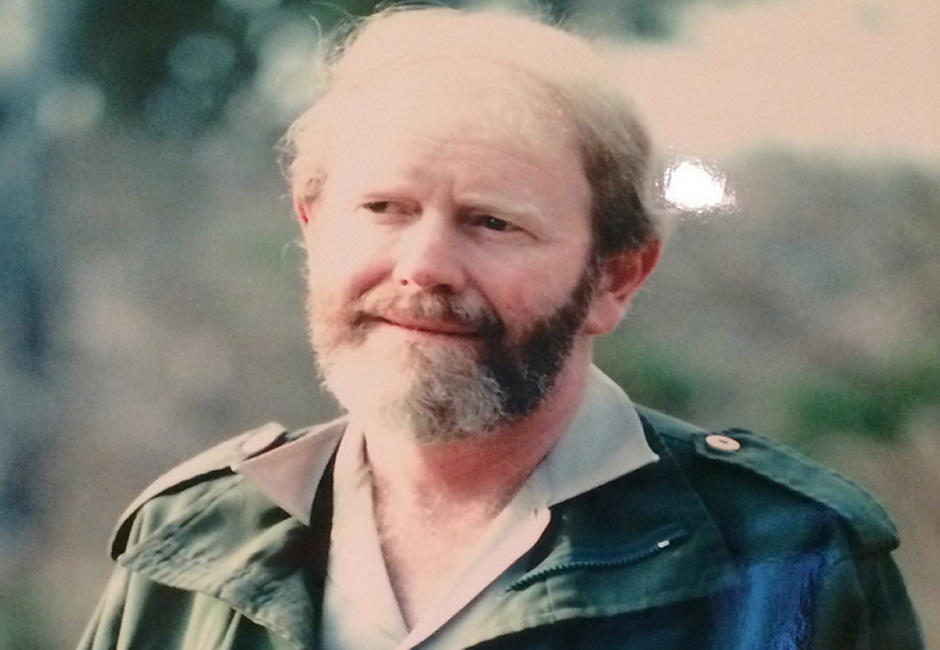
Tributes Paid to Dr. Hall-Martin, Conservation Giant
African Parks sadly announces that Dr Anthony Hall-Martin, African Parks’ co-founder and conservation director, passed away on Wednesday, 21 May in Cape Town after a prolonged struggle with cancer. He was 68 years old. As tributes pour in from around the world, those who knew Dr Hall Martin have described him as a conservation giant whose impact was felt throughout the African continent and whose legacy will resonate for generations to come. Dr Hall-Martin leaves behind his wife, Catherina, and grown-up daughters Vega and Cate.
Dr Hall-Martin leaves behind a list of formidable achievements in a conservation career that spanned nearly 50 years. During this time he tirelessly championed the cause of wildlife conservation, raised millions of dollars for its benefit, and was responsible for the establishment, expansion and management of dozens of protected areas. He was particularly renowned as a world authority on the African elephant and black rhinoceros and was the author of more than ten books and 80 published scientific papers.
Born on 12 June 1945, Anthony’s lifelong interest in wildlife started as a schoolboy in Pretoria. He attended the University of Natal, then the University of Pretoria where he graduated cum laude with an M.Sc. in Plant Ecology in 1972 and a D. Sc. in Zoology in 1975. By the time he had obtained his doctorate on giraffe biology, he had worked as a wildlife biologist at Timbavati Game Reserve and at Malawi’s Department of Forestry and Game, and as a researcher at the Mammal Research Institute, during which time he took part in the 15th SA Antarctic Expedition.
Dr Hall-Martin accomplished many of his achievements during his 25-years at South African National Parks. Over this period he was directly responsible for establishing six new national parks, including Table Mountain, Agulhas, Namaqua and Mapungubwe, raising R60-million from philanthropic donations in the process. He was responsible for the expansion of at least five other national parks, adding 400,000 hectares in total to Addo, Augrabies, Mountain Zebra,
Karoo and Marakele national parks, and had the foresight to de-proclaim the compromised Vaalbos National Park whilst laying the groundwork for its replacement – the bio-diverse Mokala National Park, soon afterwards. He was a pioneer in establishing transfrontier conservation areas and was responsible for the agreement that gave rise to the Kgalagadi ransfrontier Park straddling Botswana and South Africa, one of the world’s largest protected areas. Believing that wildlife should pay its way, he sanctioned the sale of high-value species such as white rhino and disease-free buffalo to raise much-needed funds for conservation.
As co-founder of African Parks in 2000, Dr Hall-Martin had the foresight to realize that a pragmatic new model was required to address the looming conservation crisis in many parts of Africa. As its conservation and development director, he championed African Parks’ entry into Malawi, Rwanda, Ethiopia and Zambia, and negotiated with dozens of African governments to advance the conservation of protected areas. One of his notable successes was the transformation of Majete Wildlife Reserve in Malawi from a totally depleted park to a thriving conservation success, which involved the initial restocking of over 2,500 animals. At the time of his death, Anthony was a board member of Majete Wildlife Reserve in Malawi, Liuwa Plain National Park in Zambia and Akagera National Park in Rwanda. He continued to work tirelessly to secure more protected areas under African Parks’ management until days before his death.
Dr Hall-Martin is widely renowned for his introduction of elephant and rhino to protected areas, contributing greatly to the conservation of these species. Today Malawi, Zambia and Tanzania have populations of black rhinos as a direct result of his interventions, and he was responsible for reintroducing desert black rhinos from Namibia to national parks in South Africa where they had long been extinct. He was a co-founder of the IUCN African Rhino Specialist Group and of the Rhino and Elephant Foundation and was a trusted advisor to many other organisations, including the IUCN, WWF, Endangered Wildlife Trust and Peace Parks Foundation.
During his career, he received many awards, including
- the British Council for Zoology Award,
- the Bruno H Schubert Prize in Germany,
- the Senior Captain Scott Medal from the South African Academy of Science, and
- the National Geographic Society Award.
His ten published books include renowned works such as
- Elephants of Africa; Kaokoveld – the last Wilderness;
- A Day in the Life of an African Elephant and
- Cats of Africa
and he published notable field guides to animals and national parks.
African Parks CEO Peter Fearnhead today described Dr Hall-Martin as “a true gentleman, always dignified, tactful and charming, rarely forceful about his views and self-effacing about his achievements“.
“Anthony’s life was too short-lived but his achievements were worthy of many lifetimes. He has left behind a giant legacy for the benefit of the world.”
Read More