EU to Back Kenya at CITES next month
With just a few weeks to go to the next meeting of CITES in Bangkok, the Dutch ambassador to Kenya has announced that the EU will be voting as a bloc in favour of Kenya’s proposal to ban all trade in ivory for the next 9 years and to prevent any proposals for auctions being presented to CITES in that time period. The Dutch ambassador, H.E Mr. Joost Reintjes, was paying a visit to the Kenya Wildlife Service when he announced that the Netherlands will be joining the other EU member states to vote en bloc in support of Kenya’s proposals when the international community meets in Bangkok for the 16th Convention on International Trade in Endangered Species of Wild Fauna and Flora (CITES) Conference of the Parties (CoP). The CoP meeting takes place between 3rd March and 14th March at the Queen Sirikit National Convention Centre. Kenya has submitted a number of proposals to the CITES meeting including:
- Amendment of the annotation for Ceratotherium simum simum as follows: (added text underlined): “Ceratotherium simum simum (Only the populations of South Africa and Swaziland; all other populations are included in Appendix I. For the exclusive purpose of allowing international trade in live animals to appropriate and acceptable destinations and hunting trophies. Hunting trophies from South Africa and Swaziland shall be subject to a zero export quota until at least CoP18. All other specimens shall be deemed to be specimens of species included in Appendix I and the trade in them shall be regulated accordingly.)” Proposed by: Kenya.
- Amend the annotation for Loxodonta africana as follows: (additional text underlined, deleted text struckthrough): h) no further proposals to allow trade in elephant ivory from any populations
alreadyin Appendix II shall be submitted to the Conference of the Parties for the period from CoP14 and ending nine years from the date of the single sale of ivory that is to take place in accordance with provisions in paragraphs g) i), g) ii), g) iii), g) vi) and g) vii). In addition, such further proposals shall be dealt with in accordance with Decisions 14.77 and 14.78 (Rev. CoP15). Proposed by: Burkina Faso, Eritrea, Kenya, Mali and Togo - Inclusion in Appendix II: Osyris lanceolata – East African Sandlewood. Proposed by: Kenya, United Republic of Tanzania.
- Illegal trade in Cheetahs: Actions on enforcement and trade in cheetahs. Proposed by Ethiopia, Kenya and Uganda.
At the meeting between the ambassador and Dr Kiprono, Director of Kenya Wildlife Service, the Director announced that funding was being made available for an additional 500 rangers to be recruited to help combat the current surge in poaching activity.
Read MoreBushmeat Crisis Task Force Members Celebrate Ten Years of Achievement
On 19 February 1999, 34 experts, representing 28 different organizations and agencies, assembled at the offices of the Association of Zoos and Aquariums (AZA) in Silver Spring, Maryland to discuss the commercial bushmeat crisis in tropical African countries and its impact on threatened and endangered species. Together with a growing worldwide network of concerned conservationists, zoo biologists, animal welfare advocates and medical researchers, these experts agreed to pool their talents and information resources to focus on the growing threat posed by the unsustainable, illegal, commercial trade in wildlife as food. The Bushmeat Crisis Task Force (BCTF) was formed as a center for action and information on the bushmeat crisis in Africa and around the world.
Ten years later, BCTF members join together to celebrate its many accomplishments and to highlight the urgent needs that remain. The bushmeat issue is now recognized as one of the most important threats facing wildlife and local communities in Africa today. Dozens of on-the-ground programs, new policies and increased capacity have been developed as a result of BCTF and member efforts. BCTF’s work reveals the threats to wildlife and human populations posed by the bushmeat crisis and the priority solutions needed to resolve it. Resources for implementation, however, remain scarce. The critically important funding for the Congo Basin Forest Partnership has supported governments and NGOs working together on conservation and economic issues in Central Africa, but a significant threat to wildlife and local community livelihoods still remains. In East Africa, alarming new information about the growing trade in bushmeat shows the vital need for additional financial and human capacity.
BCTF has played a crucial role in educating and engaging policy makers, scientists, development officials, donors, and the public about wildlife and the bushmeat trade. Bushmeat policy efforts have been adopted by the Convention on International Trade in Endangered Species of Fauna and Flora (CITES), the Convention on Biological Diversity (CBD), the African Forestry Law Enforcement and Governance (AFLEG) agreement, the World Conservation Union (IUCN), and the Society for Conservation Biology (SCB) with BCTF support. BCTF has been consulted and supported efforts by all three branches of the U.S. Government to address the bushmeat issue. The U.S. Fish and Wildlife Service and the U.S. Agency for International Development support for on-the-ground bushmeat projects in Africa, House and Senate committee hearings related to bushmeat and wildlife trade, and a current Federal prosecution for importation of commercial levels of bushmeat over U.S. borders are examples of BCTF’s engagement. Media attention on the bushmeat issue has mushroomed in the last decade from a few dozen articles prior to 1999 to well over a thousand articles today – many of which BCTF has provided direct input.
As well as raising awareness about bushmeat as a top priority conservation issue, a primary role of BCTF has been to create an information sharing mechanism. In addition to BCTF’s world-class website, BCTF’s Information Management and Analysis Project (IMAP) provides a central repository of information on the causes and solutions of bushmeat hunting and trade in Africa and around the world. The Bushmeat IMAP combines technical expertise in mapping forest use in Central Africa with BCTF’s worldwide databases and professional networks to provide the most current, site-specific information available on the bushmeat trade. An exhaustive digital library is paired with an online, customizable mapmaker to permit users to quickly find and map information on key elements that impact the bushmeat trade in Central Africa.
Building the capacity of professionals and educators to address the bushmeat crisis is critically important work, and BCTF has been at the forefront of these efforts. From a collaboration with the École de Faune de Garoua (Garoua Wildlife School) in Cameroon to develop and implement a bushmeat curriculum for mid-career wildlife managers to the current MENTOR (Mentoring for Environmental Training in outreach and Resource Conservation) program that is providing a wealth of bushmeat management capacity-building opportunities for conservationists in East Africa, BCTF has led important collaborative efforts in this regard. Our free, online Bushmeat Education Resource Guide (BERG) provides tools and resources to benefit students of all ages and backgrounds. Many of BCTF’s zoo members contributed important tools to the BERG and even more have benefited from it in their exhibits, programs and events.
The bushmeat issue is widely recognized as one of the highest priority conservation threats facing global biodiversity today. BCTF is recognized as a leading collaborative organization that has facilitated this critical awareness and programs to address the crisis. The members of BCTF are committed to supporting current and future generations of people and wildlife, recognizing that our children and grandchildren need us to effectively manage wildlife resources today.
Each BCTF Member organization has worked in their own way to solve this crisis on the ground, in the halls of Congress, in international policy arenas and with the public. Please visit their websites to learn more about their actions.
BCTF members and staff have worked tirelessly to raise awareness and implement solutions to the bushmeat crisis, as well as invite additional efforts from development organizations and agencies, scientists, policy makers and the public. Wildlife gives so much to so many: it is an important source of protein, a key component to local and national economies, a critical biodiversity resource providing essential ecological services for our world, and a source of wonder to us all. The bushmeat crisis threatens all of this.
Read MoreCameroon: 15 Arrested for Poaching
About 15 people have been detained following a huge anti-poaching operation involving the military, gendarmes and game guards in southeast Cameroon. During the operations, guns, elephant, chimpanzee and gorilla meat were confiscated. 22 people were initially caught during the operations, while 15 were arrested and taken to Yokadouma. Out of the 15, 11 have been detained in the gendarmerie cell while 4 have been charged to appear in court.
They are now in the Yokadouma Prison awaiting trial. The Divisional Delegate for Wildlife and Forestry in the region, Colonel Pandong Eitel, said they will press charges against the suspects and ensure that concomitant sanctions are meted out on them.
Several war arms including two AK 47 rifles (Kalashnikov), one 458-caliber rifle, three 375-caliber rifles and a cartridge containing 36 Kalashnikov bullets were amongst 30 guns confiscated during the operation that took place in Southeast Cameroon from April 25 to May 1. 15 people were also arrested and 1000 kg of bush meat seized.
Read More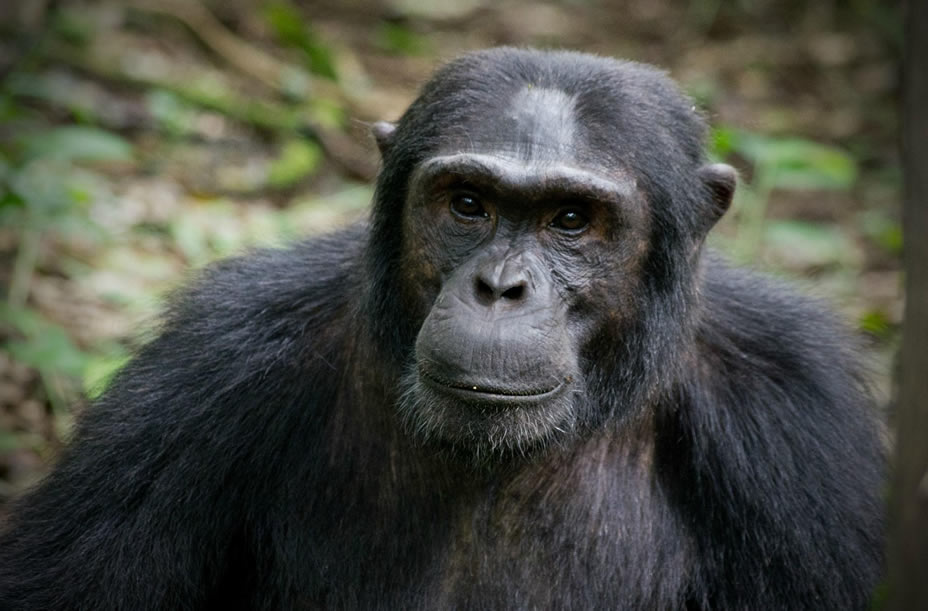
Meet the Primates of Uganda and Rwanda
One of the features that sets apart the African continent from the rest of the world is the unique gifts found in East African countries of Uganda, Rwanda and Democratic Republic of Congo. Apart from Africa’ diverse, unique and attractiveness, these countries seal the deal. Therefore it is easy to understand why all primates’ lovers from all over the world come to East Africa all year round.
Off all the regions in Africa, East Africa is exceptional. Uganda, Rwanda and Democratic Republic of Congo are a must-visit and below are the highlight each of these countries unique gifts of nature.
Mountain Gorillas
These subspecies of the Eastern gorillas are among the main draw for most travelers to Uganda and Rwanda. Mountain Gorillas are rarely seen and Uganda is one of the three localities where you can go to visit these apes.
They are herbivores in nature; feed mostly on tree leaves, bamboo shoot and stem, insects, fruits and coconuts. Gorillas live in groups referred to as a family and it consists of male, female adults, infants and Juveniles.
Usually a group is led by a dominant Silverback that is responsible for protecting all the group members, looking for food and construction of temporary overnight shelters.
For Uganda, you can go on a gorilla safari in two national parks of Bwindi Impenetrable forest and Mgahinga Gorilla National Park. Both of these parks are located in the South western part of the country. With Rwanda, gorillas are only found in Volcanoes National Park while in Democratic Republic of Congo, they are found in Virunga National park. Unlike Uganda and Rwanda which are only gifted with mountain gorillas, Democratic Republic of Congo is gifted with both mountain and lowland gorillas.
Since these three neighboring countries share forest, gorillas tend to cross among these 3 boundaries in search of food, shelter and also in case of an encounter with the wild gorillas. These 3 countries host the whole world population of gorillas both wild and habituated gorillas.
Chimpanzees
Chimpanzees are the closest primates to humans. They share about 98 percent of their DNA with human beings. There are omnivores which means that they feed on both meat and grass though their favorite foods are fruits and grass.
Chimpanzees usually inhabit the woodlands, grasslands, bamboo and tropical rain forests. Additionally, these primates live in communities that consist of about 30 -150 members. A chimpanzee can live up to 60 years and reach maturity at the age range of 11-13 years.
These primate gifts are found in Uganda and Rwanda. In Uganda they are found in Kibale Forest National Park, Budongo forest, Kyambura gorge in Queen Elizabeth National park, Ngamba Island Chimpanzee Sanctuary and Kalinzu Forest reserve. In Rwanda, they are found in Nyungwe Forest National Park.
Golden Monkeys
These primates are a subspecies of the old World monkey family. They are characterized by golden fur on their body, tail, cheeks and black limbs. Golden monkeys are found mostly in the mountainous areas of Virunga Volcanoes in Rwanda, Uganda and Democratic Republic of Congo. In the National parks of Mgahinga forest National park in Uganda and Volcanoe National park in Rwanda. They are herbivores as they feed most on bamboo shoot and stem.
When it comes to gorillas, chimps and golden monkeys, one can only view them in protected areas gazetted as National Parks, reserves and Sanctuaries. These places where created to protect these primates from extinctions.
While in Uganda, Rwanda and Democratic Republic of Congo (Although this DR Congo has suffered for any years due to political unrest, it’s a good option for experienced travelers who travel to this country on their own risk). There is no better way to enjoy these gifts than booking a tracking permit either chimps permit or gorilla permit to any of these countries and enjoy the experience of a life time. An encounter with the any of the primate’s species is worth all of expenses, time and journey
Read More