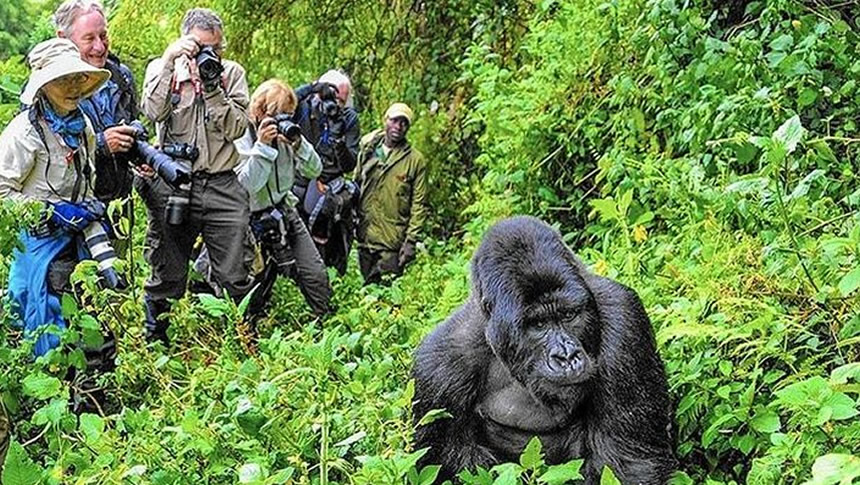
Why Go Mountain Gorilla Trekking in Africa
Wildlife, scenic Islands ,friendly people ,rich culture, landscape, lakes, rain forests, volcanoes, mountains-Uganda and Rwanda has all these to offer but gorilla trekking is more wrapped up as the top tourist attraction in the region regarded as the first welcoming trip to all visitors. Historical records confirm that Uganda and Rwanda are the leading gorilla trekking destinations in the world and have famed for its wonderful gorilla trekking experience that visitors get in company of the beautiful natural scenery. The two countries have three destinations where gorilla safaris are conducted; Bwindi Impenetrable forest and Mgahinga National park of Uganda and Volcanoes National park in Rwanda. There are so many reasons why Uganda and Rwanda win when it comes to gorilla trekking holidays.
Stunning variety of primate species
All gorilla trekking parks in Uganda and Rwanda have various beautiful primate species including golden monkeys, black and white tailed monkeys, chimpanzees, velvet monkey plus mountain gorillas the main park attraction. No matter where you track gorillas it’s a must for you to see several primate species that make your trek more incredible. There are trekking options for those who love tracking gorillas and other primates especially golden monkey trekking that is done in Mgahinga National Park and Volcanoes national Park.
Easy Last Minute Arrangement
Well it has not always been easy to plan a gorilla trekking tour in Africa but in Uganda and Rwanda things have changed as long as you get a gorilla trekking permit. Am not advising you to book your gorilla trekking tour on the last minute because it’s kind of risky but if that is the time you have , then try your luck in only Uganda and Rwanda. Sometimes tourists cancel their permits on the last minute giving you a chance to have one.
Wide Range of Accommodations to suit all Budgets
Both Uganda and Rwanda have variety of accommodation facilities in all gorilla trekking areas and sectors and suit all budgets. There is plenty to chose from depending on how much you willing to spend per night. Budget accommodations range from $20-$100, midrange $200-$350 and Luxury $500-$100 per night .However the tricky park comes when you to track gorillas in Bwindi forest national park a park of four sectors-Ruhija, Buhoma, Rushaga and Nkuringo each with different accommodation facilities. Our advice is always first book your permits and then accommodation.
Diverse Tour Activities
No matter what your interest could be but there is a lot to explore and enjoy on Uganda Rwanda gorilla Safaris .Do you want to track gorillas and golden monkeys or track gorillas and hike the volcanoes, or you love seeing the other part of the ancient tradition? Then you in a right place once you go gorilla trekking in Uganda and Rwanda. Other activities done after gorilla trekking include the community retreat, Ride a bicycle for a woman, hiking, nature walk, Batwa cultural experience etc.
Fantastic Climate
The sunny warm days throughout the year attract thousands to Uganda and Rwanda for gorilla trekking in Bwindi Forest National Park, Mgahinga National park and Volcanoes National Park. Due to change in whether patterns it can take 2-3 days without raining in the so called rainy months of the year-April, May and November. When it rains during the day the sunshine’s immediately making the weather just appealing and great for Africa safari tours.
Other reasons include the cheap gorilla permits, safety of both countries, simple gorilla formalities, high experienced professionals who organize gorilla trekking trips, gorilla trekking location, welcoming culture, friendly people among others.
Read More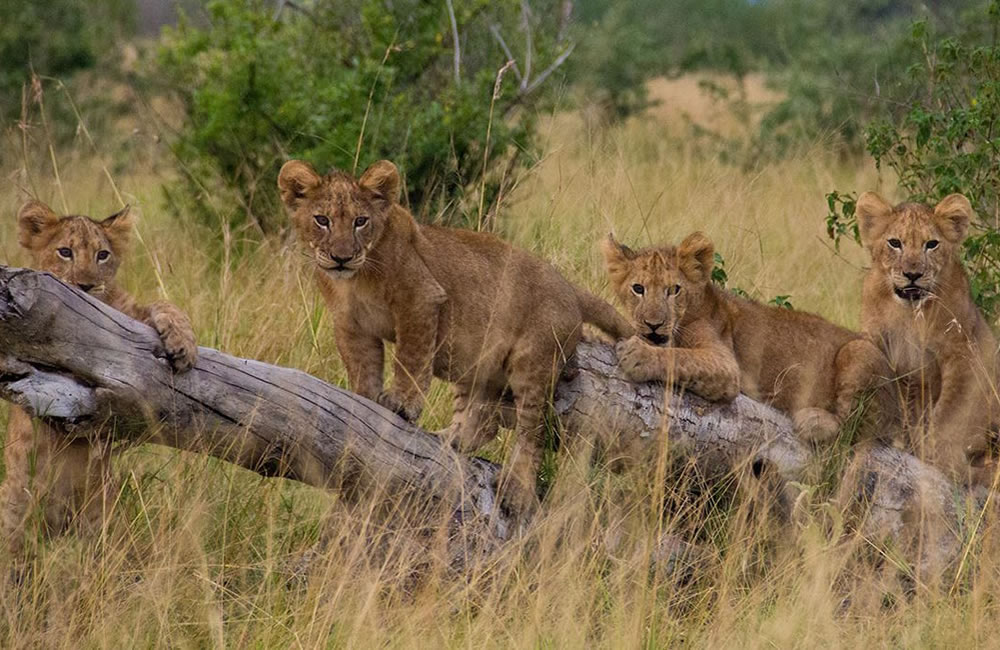
The Tree Climbing Lions of Uganda
Tree climbing lions are the highlights of most Uganda safaris to the Ishasha Sector of Queen Elizabeth National Park. Several tourists visit this East African country just to have a glance on these unique features of the pearl of Africa. The tree lions are the second most sought-after wildlife after the mountain gorillas that are looked for in the jungles of Bwindi or Mgahinga National Park, in south western Uganda.
Today most combined trips have been conducted, those that satisfy the hunger for both tree climbing lions and the forest giants; the mountain gorillas. You can have this amazing experience in just 4-6 days of adventure within Bwindi Impenetrable Forest and Queen Elizabeth National Park.
In the whole world, it is only Uganda’s Ishasha sector of Queen Elizabeth National park and Lake Manyara game reserve in southern Tanzania where you can see these lions that have mastered the art of climbing large trees. The parks that are both in East Africa protect a thriving population of lions that have adapted to hiding in the fig trees as they keenly look for the next prey. Tree Lion tracking is done from the vehicle given that these are predators. Encountering them within the minimum distance is possible and is such an experience that will not only be heart pounding but also memorable.
Being a reality in the world, lion tracking is one of the activities that Uganda’s tourism prides in. Over 50 tree climbing lions dwell in Ishasha sector. They mostly lie in the fig and acacia trees found here for shade during day time.
Yes, even if there some tree climbing lions in Lake Manyara game reserve in Tanzania, the most reliable location in the world to track the lions up in the trees is Ishasha sector, making it one of the must visit places while on a Uganda safari.
A place that gives tourists an overrated opportunity to spot tree climbing lions, not only cubs, but also the adult lions. Nothing beats watching these unique creatures climbing up a fig tree, or lying on the tree branches, an amazing sight that no tourist will ever get anywhere else except Ishasha sector, and sometimes Tanzania.
It is believed that these lions climb trees to protect themselves from the biting tsetse flies on the ground and to also escape from the ground and enjoy the cool breeze up in the trees. However, no specific reason has been proved as to why these lions climb trees unlike others.
The ever increasing population of climbing lions in Ishasha has made it a popular destination that offers an exceptional tree climbing lion tracking experiences. Trackers always watch the lions lazily lying up in the branches of huge fig trees, looking at the several Uganda kobs grazing on the plains of Ishasha. Uganda kobs are their main prey, it’s very hard for a day to go without a single lion grabbing a Uganda kob.
Visiting the ishasha plains doesn’t only reward trackers with thrilling encounters, but also sights of other wildlife species like the buffaloes, Uganda kobs, warthogs, elephants, and others since lion tracking involves driving through the flat plains, going off track so as just to have clear glances of these amazing features that Uganda beholds.
Note that other lions that don’t climb trees can also be spotted anywhere else in Queen Elizabeth national park. Still Murchison falls National Park and Kidepo valley national park are other areas where you can find a reasonable population of lions. These lions are mostly found in the savannah regions but can also be found in varied habitats including woodlands and desert.
Remember that lions are the only cats that can be described as truly social because they live in groups of 12–16 individuals called prides. A pride can have 4 – 6 related lionesses and their cubs, as well as 1–2 males who are usually with the pride for a breeding season that is 24-36months.
If you are a lion lover, and desire to have really up close encounters with lions in Africa, Uganda is the way to go. It can never go wrong on tree climbing lion tracking.
Read MoreElephants Face Extinction If Beijing Does Not Ban Ivory Trade
China needs to act now on the country’s illegal ivory trade to stop elephants becoming extinct, according to one conservationist.
China accounts for 40 per cent of the world’s trade in elephant tusks, with many bound for the country intercepted by customs officials in Hong Kong
Joyce Poole, co-director of Elephant Voices, said the creatures had experienced their worst year in history, with more than 7 per cent killed for their tusks in only a year.
She called for China to tackle the country’s appetite for ivory to save the remaining 400,000 elephants from extinction, and said the species would be extinct within a decade if poaching continued at the current rate.
Nearly 40,000 elephants are killed for their tusks every year, Poole told the South China Morning Post.
‘It’s either China does something, or we lose the elephants. It’s that big,’ she said.
‘If we can’t even save the elephants – such an iconic keystone animal, important to the African habitat – then what hope do we have?’
Ivory is known as ‘white gold’ in China, she said, and is symbol of wealth and status.
A worldwide ban on ivory was imposed in 1989, with two sanctioned sales of stock to China and Japan in 1999 and 2007.
Hong Kong customs officials have seized at least 16 tonnes of ivory worth HK$87million (more than £7million) bound for China in the past five years – which would require the tusks of 1,800 elephants, the paper reported.
About 93 per cent of elephant carcasses have been found to have been killed by poachers, said Poole, who has researched elephants for 40 years.
One elephant would earn an African poacher the same as a typical annual salary, she told the newspaper.
‘I think many people don’t know that you can’t get the tusks [for ivory] without killing the elephants,’ Poole said.
‘[Beijing is] still in denial that they have any part to play. Ivory isn’t worth much to the [Chinese] economy, but losing the elephants will make a huge difference to African countries.’ – Daily Mail
Read More