The Tree Climbing Lions of Uganda
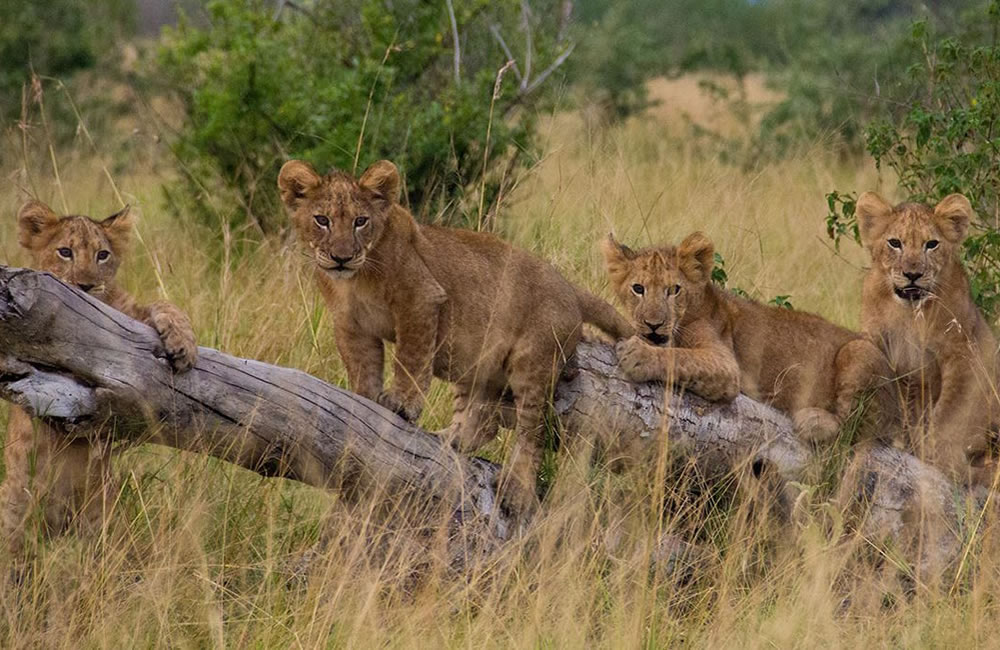
Tree climbing lions are the highlights of most Uganda safaris to the Ishasha Sector of Queen Elizabeth National Park. Several tourists visit this East African country just to have a glance on these unique features of the pearl of Africa. The tree lions are the second most sought-after wildlife after the mountain gorillas that are looked for in the jungles of Bwindi or Mgahinga National Park, in south western Uganda.
Today most combined trips have been conducted, those that satisfy the hunger for both tree climbing lions and the forest giants; the mountain gorillas. You can have this amazing experience in just 4-6 days of adventure within Bwindi Impenetrable Forest and Queen Elizabeth National Park.
In the whole world, it is only Uganda’s Ishasha sector of Queen Elizabeth National park and Lake Manyara game reserve in southern Tanzania where you can see these lions that have mastered the art of climbing large trees. The parks that are both in East Africa protect a thriving population of lions that have adapted to hiding in the fig trees as they keenly look for the next prey. Tree Lion tracking is done from the vehicle given that these are predators. Encountering them within the minimum distance is possible and is such an experience that will not only be heart pounding but also memorable.
Being a reality in the world, lion tracking is one of the activities that Uganda’s tourism prides in. Over 50 tree climbing lions dwell in Ishasha sector. They mostly lie in the fig and acacia trees found here for shade during day time.
Yes, even if there some tree climbing lions in Lake Manyara game reserve in Tanzania, the most reliable location in the world to track the lions up in the trees is Ishasha sector, making it one of the must visit places while on a Uganda safari.
A place that gives tourists an overrated opportunity to spot tree climbing lions, not only cubs, but also the adult lions. Nothing beats watching these unique creatures climbing up a fig tree, or lying on the tree branches, an amazing sight that no tourist will ever get anywhere else except Ishasha sector, and sometimes Tanzania.
It is believed that these lions climb trees to protect themselves from the biting tsetse flies on the ground and to also escape from the ground and enjoy the cool breeze up in the trees. However, no specific reason has been proved as to why these lions climb trees unlike others.
The ever increasing population of climbing lions in Ishasha has made it a popular destination that offers an exceptional tree climbing lion tracking experiences. Trackers always watch the lions lazily lying up in the branches of huge fig trees, looking at the several Uganda kobs grazing on the plains of Ishasha. Uganda kobs are their main prey, it’s very hard for a day to go without a single lion grabbing a Uganda kob.
Visiting the ishasha plains doesn’t only reward trackers with thrilling encounters, but also sights of other wildlife species like the buffaloes, Uganda kobs, warthogs, elephants, and others since lion tracking involves driving through the flat plains, going off track so as just to have clear glances of these amazing features that Uganda beholds.
Note that other lions that don’t climb trees can also be spotted anywhere else in Queen Elizabeth national park. Still Murchison falls National Park and Kidepo valley national park are other areas where you can find a reasonable population of lions. These lions are mostly found in the savannah regions but can also be found in varied habitats including woodlands and desert.
Remember that lions are the only cats that can be described as truly social because they live in groups of 12–16 individuals called prides. A pride can have 4 – 6 related lionesses and their cubs, as well as 1–2 males who are usually with the pride for a breeding season that is 24-36months.
If you are a lion lover, and desire to have really up close encounters with lions in Africa, Uganda is the way to go. It can never go wrong on tree climbing lion tracking.
Read MoreElephants Face Extinction If Beijing Does Not Ban Ivory Trade
China needs to act now on the country’s illegal ivory trade to stop elephants becoming extinct, according to one conservationist.
China accounts for 40 per cent of the world’s trade in elephant tusks, with many bound for the country intercepted by customs officials in Hong Kong
Joyce Poole, co-director of Elephant Voices, said the creatures had experienced their worst year in history, with more than 7 per cent killed for their tusks in only a year.
She called for China to tackle the country’s appetite for ivory to save the remaining 400,000 elephants from extinction, and said the species would be extinct within a decade if poaching continued at the current rate.
Nearly 40,000 elephants are killed for their tusks every year, Poole told the South China Morning Post.
‘It’s either China does something, or we lose the elephants. It’s that big,’ she said.
‘If we can’t even save the elephants – such an iconic keystone animal, important to the African habitat – then what hope do we have?’
Ivory is known as ‘white gold’ in China, she said, and is symbol of wealth and status.
A worldwide ban on ivory was imposed in 1989, with two sanctioned sales of stock to China and Japan in 1999 and 2007.
Hong Kong customs officials have seized at least 16 tonnes of ivory worth HK$87million (more than £7million) bound for China in the past five years – which would require the tusks of 1,800 elephants, the paper reported.
About 93 per cent of elephant carcasses have been found to have been killed by poachers, said Poole, who has researched elephants for 40 years.
One elephant would earn an African poacher the same as a typical annual salary, she told the newspaper.
‘I think many people don’t know that you can’t get the tusks [for ivory] without killing the elephants,’ Poole said.
‘[Beijing is] still in denial that they have any part to play. Ivory isn’t worth much to the [Chinese] economy, but losing the elephants will make a huge difference to African countries.’ – Daily Mail
Read MoreEU to Back Kenya at CITES next month
With just a few weeks to go to the next meeting of CITES in Bangkok, the Dutch ambassador to Kenya has announced that the EU will be voting as a bloc in favour of Kenya’s proposal to ban all trade in ivory for the next 9 years and to prevent any proposals for auctions being presented to CITES in that time period. The Dutch ambassador, H.E Mr. Joost Reintjes, was paying a visit to the Kenya Wildlife Service when he announced that the Netherlands will be joining the other EU member states to vote en bloc in support of Kenya’s proposals when the international community meets in Bangkok for the 16th Convention on International Trade in Endangered Species of Wild Fauna and Flora (CITES) Conference of the Parties (CoP). The CoP meeting takes place between 3rd March and 14th March at the Queen Sirikit National Convention Centre. Kenya has submitted a number of proposals to the CITES meeting including:
- Amendment of the annotation for Ceratotherium simum simum as follows: (added text underlined): “Ceratotherium simum simum (Only the populations of South Africa and Swaziland; all other populations are included in Appendix I. For the exclusive purpose of allowing international trade in live animals to appropriate and acceptable destinations and hunting trophies. Hunting trophies from South Africa and Swaziland shall be subject to a zero export quota until at least CoP18. All other specimens shall be deemed to be specimens of species included in Appendix I and the trade in them shall be regulated accordingly.)” Proposed by: Kenya.
- Amend the annotation for Loxodonta africana as follows: (additional text underlined, deleted text struckthrough): h) no further proposals to allow trade in elephant ivory from any populations
alreadyin Appendix II shall be submitted to the Conference of the Parties for the period from CoP14 and ending nine years from the date of the single sale of ivory that is to take place in accordance with provisions in paragraphs g) i), g) ii), g) iii), g) vi) and g) vii). In addition, such further proposals shall be dealt with in accordance with Decisions 14.77 and 14.78 (Rev. CoP15). Proposed by: Burkina Faso, Eritrea, Kenya, Mali and Togo - Inclusion in Appendix II: Osyris lanceolata – East African Sandlewood. Proposed by: Kenya, United Republic of Tanzania.
- Illegal trade in Cheetahs: Actions on enforcement and trade in cheetahs. Proposed by Ethiopia, Kenya and Uganda.
At the meeting between the ambassador and Dr Kiprono, Director of Kenya Wildlife Service, the Director announced that funding was being made available for an additional 500 rangers to be recruited to help combat the current surge in poaching activity.
Read MoreBushmeat Crisis Task Force Members Celebrate Ten Years of Achievement
On 19 February 1999, 34 experts, representing 28 different organizations and agencies, assembled at the offices of the Association of Zoos and Aquariums (AZA) in Silver Spring, Maryland to discuss the commercial bushmeat crisis in tropical African countries and its impact on threatened and endangered species. Together with a growing worldwide network of concerned conservationists, zoo biologists, animal welfare advocates and medical researchers, these experts agreed to pool their talents and information resources to focus on the growing threat posed by the unsustainable, illegal, commercial trade in wildlife as food. The Bushmeat Crisis Task Force (BCTF) was formed as a center for action and information on the bushmeat crisis in Africa and around the world.
Ten years later, BCTF members join together to celebrate its many accomplishments and to highlight the urgent needs that remain. The bushmeat issue is now recognized as one of the most important threats facing wildlife and local communities in Africa today. Dozens of on-the-ground programs, new policies and increased capacity have been developed as a result of BCTF and member efforts. BCTF’s work reveals the threats to wildlife and human populations posed by the bushmeat crisis and the priority solutions needed to resolve it. Resources for implementation, however, remain scarce. The critically important funding for the Congo Basin Forest Partnership has supported governments and NGOs working together on conservation and economic issues in Central Africa, but a significant threat to wildlife and local community livelihoods still remains. In East Africa, alarming new information about the growing trade in bushmeat shows the vital need for additional financial and human capacity.
BCTF has played a crucial role in educating and engaging policy makers, scientists, development officials, donors, and the public about wildlife and the bushmeat trade. Bushmeat policy efforts have been adopted by the Convention on International Trade in Endangered Species of Fauna and Flora (CITES), the Convention on Biological Diversity (CBD), the African Forestry Law Enforcement and Governance (AFLEG) agreement, the World Conservation Union (IUCN), and the Society for Conservation Biology (SCB) with BCTF support. BCTF has been consulted and supported efforts by all three branches of the U.S. Government to address the bushmeat issue. The U.S. Fish and Wildlife Service and the U.S. Agency for International Development support for on-the-ground bushmeat projects in Africa, House and Senate committee hearings related to bushmeat and wildlife trade, and a current Federal prosecution for importation of commercial levels of bushmeat over U.S. borders are examples of BCTF’s engagement. Media attention on the bushmeat issue has mushroomed in the last decade from a few dozen articles prior to 1999 to well over a thousand articles today – many of which BCTF has provided direct input.
As well as raising awareness about bushmeat as a top priority conservation issue, a primary role of BCTF has been to create an information sharing mechanism. In addition to BCTF’s world-class website, BCTF’s Information Management and Analysis Project (IMAP) provides a central repository of information on the causes and solutions of bushmeat hunting and trade in Africa and around the world. The Bushmeat IMAP combines technical expertise in mapping forest use in Central Africa with BCTF’s worldwide databases and professional networks to provide the most current, site-specific information available on the bushmeat trade. An exhaustive digital library is paired with an online, customizable mapmaker to permit users to quickly find and map information on key elements that impact the bushmeat trade in Central Africa.
Building the capacity of professionals and educators to address the bushmeat crisis is critically important work, and BCTF has been at the forefront of these efforts. From a collaboration with the École de Faune de Garoua (Garoua Wildlife School) in Cameroon to develop and implement a bushmeat curriculum for mid-career wildlife managers to the current MENTOR (Mentoring for Environmental Training in outreach and Resource Conservation) program that is providing a wealth of bushmeat management capacity-building opportunities for conservationists in East Africa, BCTF has led important collaborative efforts in this regard. Our free, online Bushmeat Education Resource Guide (BERG) provides tools and resources to benefit students of all ages and backgrounds. Many of BCTF’s zoo members contributed important tools to the BERG and even more have benefited from it in their exhibits, programs and events.
The bushmeat issue is widely recognized as one of the highest priority conservation threats facing global biodiversity today. BCTF is recognized as a leading collaborative organization that has facilitated this critical awareness and programs to address the crisis. The members of BCTF are committed to supporting current and future generations of people and wildlife, recognizing that our children and grandchildren need us to effectively manage wildlife resources today.
Each BCTF Member organization has worked in their own way to solve this crisis on the ground, in the halls of Congress, in international policy arenas and with the public. Please visit their websites to learn more about their actions.
BCTF members and staff have worked tirelessly to raise awareness and implement solutions to the bushmeat crisis, as well as invite additional efforts from development organizations and agencies, scientists, policy makers and the public. Wildlife gives so much to so many: it is an important source of protein, a key component to local and national economies, a critical biodiversity resource providing essential ecological services for our world, and a source of wonder to us all. The bushmeat crisis threatens all of this.
Read MoreCameroon: 15 Arrested for Poaching
About 15 people have been detained following a huge anti-poaching operation involving the military, gendarmes and game guards in southeast Cameroon. During the operations, guns, elephant, chimpanzee and gorilla meat were confiscated. 22 people were initially caught during the operations, while 15 were arrested and taken to Yokadouma. Out of the 15, 11 have been detained in the gendarmerie cell while 4 have been charged to appear in court.
They are now in the Yokadouma Prison awaiting trial. The Divisional Delegate for Wildlife and Forestry in the region, Colonel Pandong Eitel, said they will press charges against the suspects and ensure that concomitant sanctions are meted out on them.
Several war arms including two AK 47 rifles (Kalashnikov), one 458-caliber rifle, three 375-caliber rifles and a cartridge containing 36 Kalashnikov bullets were amongst 30 guns confiscated during the operation that took place in Southeast Cameroon from April 25 to May 1. 15 people were also arrested and 1000 kg of bush meat seized.
Read More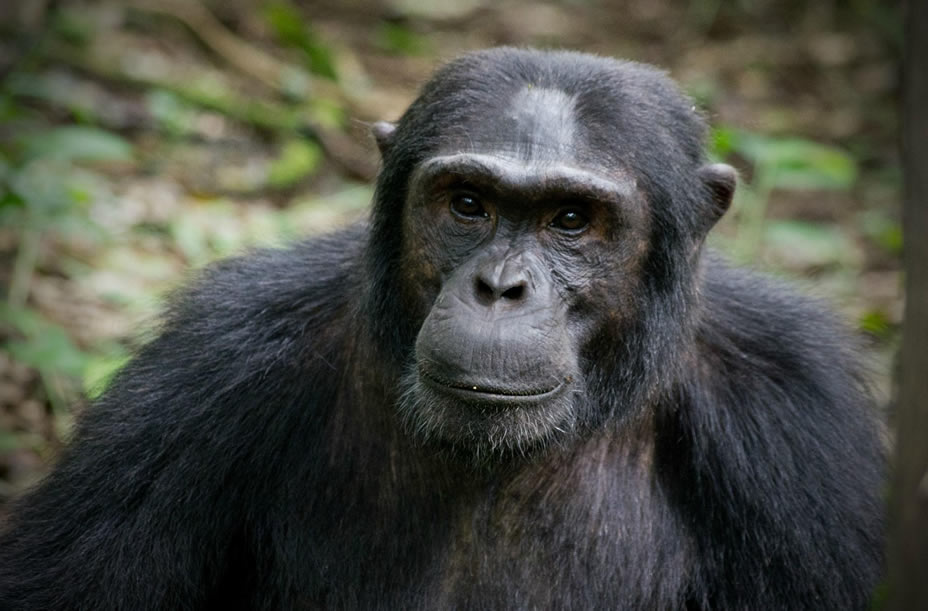
Meet the Primates of Uganda and Rwanda
One of the features that sets apart the African continent from the rest of the world is the unique gifts found in East African countries of Uganda, Rwanda and Democratic Republic of Congo. Apart from Africa’ diverse, unique and attractiveness, these countries seal the deal. Therefore it is easy to understand why all primates’ lovers from all over the world come to East Africa all year round.
Off all the regions in Africa, East Africa is exceptional. Uganda, Rwanda and Democratic Republic of Congo are a must-visit and below are the highlight each of these countries unique gifts of nature.
Mountain Gorillas
These subspecies of the Eastern gorillas are among the main draw for most travelers to Uganda and Rwanda. Mountain Gorillas are rarely seen and Uganda is one of the three localities where you can go to visit these apes.
They are herbivores in nature; feed mostly on tree leaves, bamboo shoot and stem, insects, fruits and coconuts. Gorillas live in groups referred to as a family and it consists of male, female adults, infants and Juveniles.
Usually a group is led by a dominant Silverback that is responsible for protecting all the group members, looking for food and construction of temporary overnight shelters.
For Uganda, you can go on a gorilla safari in two national parks of Bwindi Impenetrable forest and Mgahinga Gorilla National Park. Both of these parks are located in the South western part of the country. With Rwanda, gorillas are only found in Volcanoes National Park while in Democratic Republic of Congo, they are found in Virunga National park. Unlike Uganda and Rwanda which are only gifted with mountain gorillas, Democratic Republic of Congo is gifted with both mountain and lowland gorillas.
Since these three neighboring countries share forest, gorillas tend to cross among these 3 boundaries in search of food, shelter and also in case of an encounter with the wild gorillas. These 3 countries host the whole world population of gorillas both wild and habituated gorillas.
Chimpanzees
Chimpanzees are the closest primates to humans. They share about 98 percent of their DNA with human beings. There are omnivores which means that they feed on both meat and grass though their favorite foods are fruits and grass.
Chimpanzees usually inhabit the woodlands, grasslands, bamboo and tropical rain forests. Additionally, these primates live in communities that consist of about 30 -150 members. A chimpanzee can live up to 60 years and reach maturity at the age range of 11-13 years.
These primate gifts are found in Uganda and Rwanda. In Uganda they are found in Kibale Forest National Park, Budongo forest, Kyambura gorge in Queen Elizabeth National park, Ngamba Island Chimpanzee Sanctuary and Kalinzu Forest reserve. In Rwanda, they are found in Nyungwe Forest National Park.
Golden Monkeys
These primates are a subspecies of the old World monkey family. They are characterized by golden fur on their body, tail, cheeks and black limbs. Golden monkeys are found mostly in the mountainous areas of Virunga Volcanoes in Rwanda, Uganda and Democratic Republic of Congo. In the National parks of Mgahinga forest National park in Uganda and Volcanoe National park in Rwanda. They are herbivores as they feed most on bamboo shoot and stem.
When it comes to gorillas, chimps and golden monkeys, one can only view them in protected areas gazetted as National Parks, reserves and Sanctuaries. These places where created to protect these primates from extinctions.
While in Uganda, Rwanda and Democratic Republic of Congo (Although this DR Congo has suffered for any years due to political unrest, it’s a good option for experienced travelers who travel to this country on their own risk). There is no better way to enjoy these gifts than booking a tracking permit either chimps permit or gorilla permit to any of these countries and enjoy the experience of a life time. An encounter with the any of the primate’s species is worth all of expenses, time and journey
Read More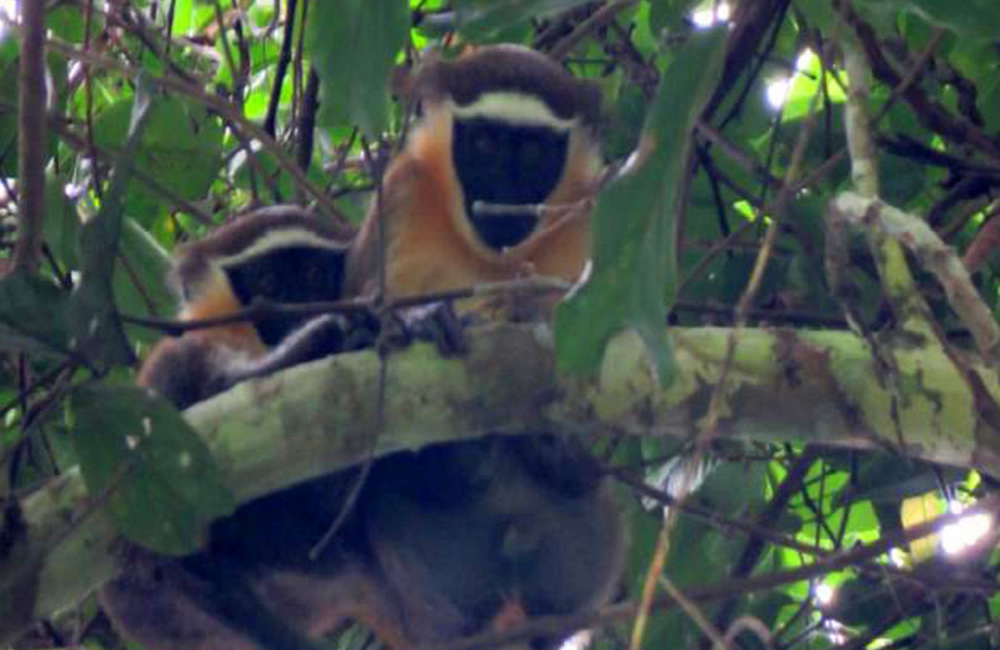
The Critically Endangered Dryas Monkeys of DR Congo
If you happen to go on a primate safari in the Democratic Republic of Congo, be sure to meet exceptional wildlife species not found in other African countries, and the Dryas monkeys are one of them.
Also referred as Salonga monkeys, the Dryas monkeys are scientifically known as Cercopithecus dryas and are interestingly one of the less- known species of the guenon that inhabit only areas of the Congo Basin, confined to the left banks of the Congo River Basin.
It is now clear that these primates classified as Cercopithecus Salonga (with the common name being Zaire Diana monkeys) was actually the Dryas monkeys. However, some older records still indicate that Dryas monkeys are sub-species of the Diana monkeys thus categorize it as C.diana dryas yet geographically isolated from any recognized Diana monkey population.
These species of primates mainly occupy areas with secondary forests but are also found within the marshlands, river and lowland areas of the Congo Basin.
The lifespan of the Dryas monkeys is 10 to 15 years in the wild and there are no populations of these primates in captivity.
Dryas monkeys are categorized under IUCN’s Red List of Critically Endangered Species. Whereas data on these primates had been considered deficient, records show that they are very rare with their total population being fewer than 200 individuals.
These primates exhibit sexual dimorphism. An adult male Dryas monkey is characterized by black muzzle, short and white facial beards while the dorsal surface of their bodies along with their coronal crowns are grayish chestnut in color. Matured females and offsprings usually exhibit smaller parts of their bodies that are white in color, which are not present around their buttocks as well as shoulder areas. Not only that, the upper parts of their arms are relatively lighter in color compared to the ones of the male counterparts.
These monkey species also have white colors on the ventral sides of their bodies, tails and bottom potions of their limbs as well as buttocks. Not only that, the upper part of their limbs have a similar color to the rest of the body parts being dark- grey or black-brown color.
Dryas monkeys are very social primates that live in groups of either their own species or mixed with other species of primates. Groups/troops are normally made up of three to thirty members including females, several offsprings and only one adult male.
Their bodies measure from 40 to 55 centimeters and 50 to 75 centimeters with the tails. Not only that, adult males weigh from four to seven kilograms while the females are always half of that in terms of weight.
They are mainly herbivores that consume mostly fruits, flowers and young leaves. However, due to the seasonality of their vegetarian diet, they can also feed on invertebrates, especially insects.
Dryas monkeys use both oral and visual communication when interacting with fellow Dryas monkeys or other primate species. They sometimes use staring, especially to threaten their enemies.
Their gestational period is five months, after which a single offspring is born and reaches sexual maturity after three years of life.
Read MoreTop Five National Parks in Kenya
Ask most Africa travel enthusiasts, and they’ll easily tell you that Kenya is the real home of the African safari. To this day, the country’s diverse wildlife and magnificent landscapes continue to attract hundreds of thousands of tourists every year. This is despite the rising competition from countries like Tanzania, South Africa, Namibia, and Zambia.
Of course wildlife safaris are Kenya’s biggest attraction, which is why in today’s post, I write about what, in my opinion, are the five of the top national parks and game reserves in Kenya.
1. Masai Mara Game Reserve
Certainly, no other Kenyan game reserve or national park can rival the Maasai Mara in terms of fame and popularity. I can attribute a huge chunk of this fame to the annual wildebeest migration between the Mara and the neighboring Serengeti national park in Tanzania. This great migration takes place between June and September, and remains the top draw for tourists into the Mara.
But that does not mean the migration is all that the Mara has to offer. In fact, you can travel to the reserve almost anytime of the year, and still have a great safari experience. The reserve has a great concentration of animals including all the big five. It may sometimes be hard to spot rhinos and leopards in the Mara, but you can be sure you will see plenty of elephants, lions, and buffaloes all year round.
When is a trip to the Mara not for you?
If you do not like tourist crowds, you may not enjoy the Mara during the wildebeest migration season. Usually, there is little regulation on the numbers of people allowed in the reserve at any time. The only limiting factor is the available accommodation and bed space in the Masai Mara lodges. While on game drives during the migration, you will often have to share the best game watching spots with scores of other tour vans. Unfortunately, the migration season is also the best season for wildlife spotting.
2. Amboseli National Reserve
For a long time, Amboseli national reserve has remained the second most popular national park in Kenya, after the Masai Mara. The ever present backdrop of Mt Kilimanjaro in the background makes Amboseli the ideal destination for wildlife photography. All the big five are present in the reserve. However, the large herds of huge roaming elephants are what define Amboseli most.
In the year 2009, Amboseli experienced one of its worst droughts. Many animals died in the process, especially the herbivores, greatly affecting the balance between predators and their prey. So much that the Kenya wildlife service had to translocate some zebras and wildebeest from other parks in an attempt to correct the imbalance.
3. Lake Nakuru National Park
As its name suggests, this national park is centered around the Lake Nakuru in the Rift valley. The lake hosts hundreds of bird species, the most popular being the flamingos. These water birds cover the surface of the lake, giving it a pink-carpet like appearance when viewed from a distance. If there is a birdwatchers’ paradise in Kenya, then it is Lake Nakuru national park.
In addition to being a haven for birdwatching, Lake Nakuru national park is also a sanctuary for the endangered black and white rhinos. At Lake Nakuru, you also stand your best chance of spotting leopards, which are usually very elusive animals. Other animals you are guaranteed to see include several gazelle species, hyrax, lions, warthogs, monkeys and babboons among others.
4. Samburu Game Reserve
Samburu game reserve and the adjoining Buffalo springs and Shaba game reserves are most renowned for unique animals that you will not find in any other Kenyan game park. These include the grevy’s zebra, reticulated giraffes, kudu, somali ostriches, and the gerenuk. This is in addition to the many lions, elephants, beisa oryx, cheetahs, and leopards.
If you want to enjoy exclusive calmness while on a Kenya safari, Samburu game reserve is a good choice. Perhaps because of its dramatic arid terrain, Samburu does not have as many visitors as the Mara, Amboseli, and Lake Nakuru. Yet it is a true wildlife and birdwatching haven. Occasionally, the game reserve remains closed to tourists because of insecurity in the neighboring regions. Most recently, tourists had to be evacuated from the lodges in Samburu game reserve because of floods. But all in all, Samburu remains an ideal destination especially if you want to avoid crowds.
5. Tsavo National Park
I have included Tsavo in this list because, first, it is the biggest national park in Kenya, and second, it is the best destination when you when you want to enjoy a brief wildlife safari while on a beach holiday at the Kenyan coast. Because of its size, Tsavo is divided into two units: Tsavo East and Tsavo West.Tsavo is perhaps most popular for its fierce maneless lions, those of the “Man eaters of tsavo” fame. Tsavo is also home to large red-skinned elephant herds, black rhinos, leopards, giraffes, hippos and hundreds of other animal species.
Sometime back, the population of elephants and black rhinos in Tsavo was highly threatened by poachers. The Kenyan government however fought back through the Kenya wildlife service, and today, the poaching threat is not as bad as it was in the 1980s.
Choosing the best safari in Kenya
There are several reputable tour companies and tour operators in Kenya providing safaris to all the destinations I have mentioned. If you are interested in going on safari in Kenya, the Africa guide website has a number of great Kenya safari packages. Click here for safaris in Kenya from the Active African Vacations.
Read More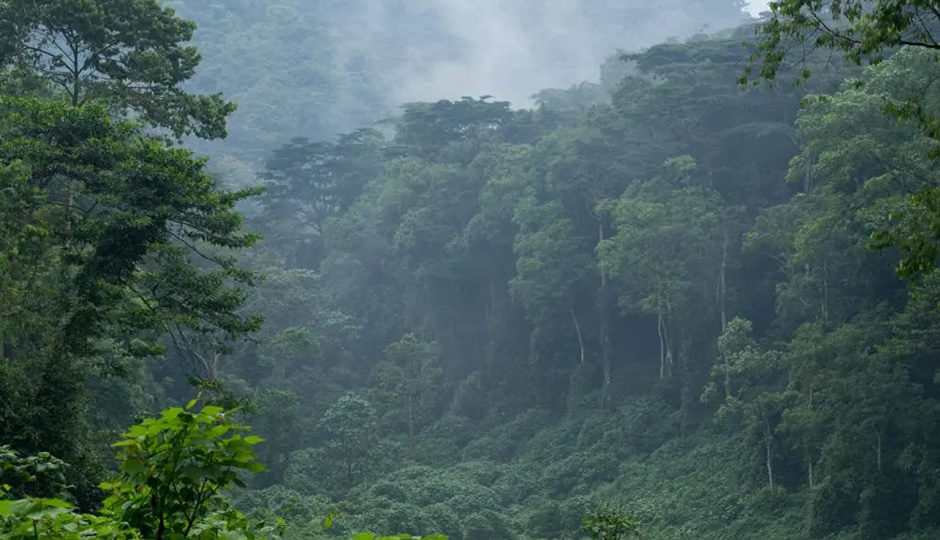
Gorilla Trekking in the Virunga Mountains
National parks in Virunga region includes: Virunga National Park in Democratic Republic of Congo (DRC), Volcanoes National park (Rwanda) and Mgahinga national park in Uganda.
The Virunga region is the best world’s mountain gorilla trekking centre because of the presence of the mountain ranges. Virunga region is composed of nine Virunga mountains namely; Mt. Mikeno, Mt. Bisoke, Mt. Karismbi. Mt. Muhabura, Mt. sabyinyo, Mt. Gahinga, Mt. Karisoke, Mt, Nyamulagira and Mount Nyiragongo. The list of mountain ranges gives a wonderful view while trekking Gorillas in the Virunga region.
The largest number of Mountain Gorillas is found in Virunga ranges; Uganda hosts 14 habituated Gorilla groups, Rwanda has 1o habituated Gorilla group and many others in DR. Congo. For trekkers who want to meet a variety, Virunga region is the best option.
In Virunga region, you can trek both Mountain and Low land Gorillas. Mountain Gorillas can be found in Mgahinga National park, Uganda and in Volcanoes National park, Rwanda.
In Virunga region, you can choose to trek gorillas in any of the three countries since there are near each other but you can as well decide to meet Gorillas of each country. It should be noted that Mgahinga National Park is situated in Uganda, Volcanoes National Park in Rwanda and Virunga National park in Democratic Republic of Congo- all the three parks are situated in Virunga region.
Trekkers gain physical fitness while climbing on the slopes of Virunga Mountains to search Gorillas. The trek takes approximately 4-7 hours but rarely takes a full day. Weak, sick and aged trekkers are advised to trek in Volcanoes national Park since some Gorilla groups there are found after few minutes’ walk from the park headquarter. In other word, Gorilla trekking in Rwanda is less strenuous than in Uganda and DR. Congo.
Virunga region is convenient from Kigali International Airport in Rwanda; it is 2-3hours drive to Volcanoes national park from Kigali Airport, 4hours drive from Kigali Airport to Mgahinga National park and 7hours drive from Kigali Airport to Virunga national park in DR. Congo. Therefore, after trekking Gorillas, visitors can easily fly out of the region through Kigali International Airport due to its convenience.
The ease to get Gorilla permits – Gorilla permits in Virunga region are easily obtained from Uganda Wildlife Authority, Rwanda development boards and at DR. Congo tourism board.
Gorilla trekking in Uganda and DR. Congo takes place in tropical forest while in Rwanda; it takes place in bamboo forest. The differences in vegetation attract many to trekking Gorillas in Virunga region in order to experience different treks.
Read MoreInterview With Douglas Groves ‘The Elephant Man’
When elephants are your best friends….
Douglas Groves
Q: Doug, I have met you a couple of times in Botswana and from the way you live and handle your elephants I would say you have more with animals than with humans. Is that statement correct and how did you develop your deep love for nature in general and your elephants in particular?
A: Hello Johan! Thanks for this opportunity to share our story with your readers.
Johan, I believe that every child is born with an affinity for the natural world, and my deep love for nature was heightened due to a developmental and speech impediment which I was born with.
For most of my elementary education my peers and teachers were unable to understand the bulk of my speech, so for comfort and companionship, I developed non-verbal skills and gravitated towards animals. Through a series of verbal shaping progressions, I eventually learned to speak so that others could understand me, and in the process, I also learned a lot about communicating with animals.
When I first met Jabu and Thembi in October of 1988, they had been orphaned from a Kruger National Park culling operation and were very traumatized. They were in serious need of nurturing and also needed some specialized care which I was in a position to provide. The bonds grew very quickly, as they typically do with young mammals, and before long we were inseparable.
Q: Unlike other close encounters with wildlife projects do you not allow tourists to ride your elephants, although you could make a handsome living out of that. What is your reasoning behind the very protective way you deal with your elephants?
Answer: We don’t offer commercial riding with our elephants for a variety of reasons.
First of all we feel that people learn much more about elephant life by observing natural behavior. Secondly, we believe that it is psychologically more difficult to create an atmosphere of respect and reverence for these magnificent animals if people are sitting on top of them.
Lastly, we also feel that it would generally detract from their quality of life.
Q: For many years now you have been living with your three elephants and surely you got to know them very well. How would you describe and characterize each single one of them?
A: Jabu is handsome,bold, clever, independent, generous, patient and calm.
Thembi is smart, quick, cute, resourceful, focused and sometimes flighty.
Morula is thoughtful, warm, wise, particular, social, intelligent and funny.
Jabu, Morula and Thembi
Q: Dealing with elephants on a daily basis surely has its ups and downs. What are your biggest ups and what are your most pressing downs?
A: Ups include an incredible feeling of oneness with the herd and their habitat. Being immersed in this mesmerizing wilderness gives us an opportunity to interactively connect with and learn about the diversity of flora and fauna surrounding us. There are always new surprises and challenges and I often enjoy the Adrenalin surge of an unexpected encounter. Some of the trade offs include more limited social interaction with our own species, and I miss festivals, concerts, book stores and museums. The most dreaded drawback, however, is the horrendous hairy caterpillars! They come out during the rainy season and have a toxic irritant on their hairs that can cause an itching insanity.
Q: Since your elephants have a ‘will of their own’ I am sure you had some interesting adventures with your three elephants. Tell us a short story that you will never forget:
A: As many of your readers will know, young bull elephants normally leave the herd that they were born in to prior to puberty. There is a lot of variation with the timing and we are often surprised at how young they leave. When Jabu was about 9 years old , he decided it was time for a walkabout. One morning while I was out in the bush watching the herd feed, I remembered that I had left some eye drops back at camp. We were not very far away from camp and the elephants seemed very content with their crunching, so I quickly headed back to get the eye drops. When I returned, Jabu was gone. The girls didn’t seem to even notice or care that he was gone! At first I was pretty calm, looking all around the immediate area behind bushes and in clumps of trees. Eventually I decided that I would need to take the girls back to camp and solicit some help to track Jabu down. We had an excellent bushman tracker on staff and fortunately we found Jabu’s tracks and followed them for hours, but eventually they got mixed in with other recent tracks and we started loosing light so we had to call the search off. He was gone five weeks! When he finally wandered back to camp, and we saw that he was well, we were overcome with joy!
Q: I see that you are quite active with social media and you worry a lot about our environment in general. What is your biggest fear for the future of our planet and what advice would you like to give the readers of this article?
A: My biggest fear would be widespread ecological collapse due to changing life support parameters. Large scale topographical and biochemical changes in our oceans and atmosphere are well underway and this will impact all life forms. By becoming ecologically literate, re-localizing our economies and trying to tread as lightly as possible on this precious planet, we might save a few species and slow the rate of change.
Q: If you could make three wishes, what would those wishes be?
A: That we could live in understanding and harmony with all life forms.
That we could keep human populations at a sustainable level.
and that we would find fulfillment in activities that promote the well being of the whole planet.
Q: Last but not least, what do your elephants mean to you? Are they more important than your lady partner? I understand if you lie in your answer…..
My wife, Sandi, the elephants and I are family. We have formed these warm bonds of kinship over the past two decades and we will go down this road together.
Read More