4 Poachers Killed in 5 days in Kenya
The Kenya Wildlife Service (KWS) has been involved in 2 operations against poachers in the last 5 days which has seen 4 killed, dozens arrested and a range of ivory and weapons seized.
When William Kiprono took over as director of the Kenya Wildlife Service a couple of weeks ago there was an element of surprise and concern that such a high-profile position should be awarded to a relatively unknown career administrator. Any concerns raised though have firmly been put to rest as Kiprono leads the KWS in to a more pro-active fight against the poachers.
In the first operation on Monday 2 poachers were killed and 24kg of ivory recovered together with firearms and ammunition. KWS rangers discovered 4 poachers stripping an elephant of its tusks in the Meru National Park. During the ensuing gunfight 2 of the poachers were killed and the other escaped despite being injured.
The second incident occurred early this morning when a ranger patrol encountered 3 poachers in the Solio Ranch near Mweiga Township, Nyeri County. The range is home to both white and rare black rhino. The poachers had shot and injured a rhino before being disturbed by the ranger patrol. In the encounter 2 of the poachers were killed and the third one escaped. The rhino is currently being treated by vets.
The last week has also seen a large number of arrests including a Chinese and a Congolese trying to take ivory out of Kenya through airports. With the KWS canine unit now working around the clock there is more chance of customs intercepting smugglers as they head out the country.
In total over the last week 40 people have been arrested in Kenya for smuggling or poaching activities. There has also been seizures of 82kg of raw ivory, rifles and ammunition.
It has been a good start for the new Director and if poachers thought they’d get an easy ride with a new face in command then they have just discovered that Director William Kiprono is not someone to dismiss.
Read More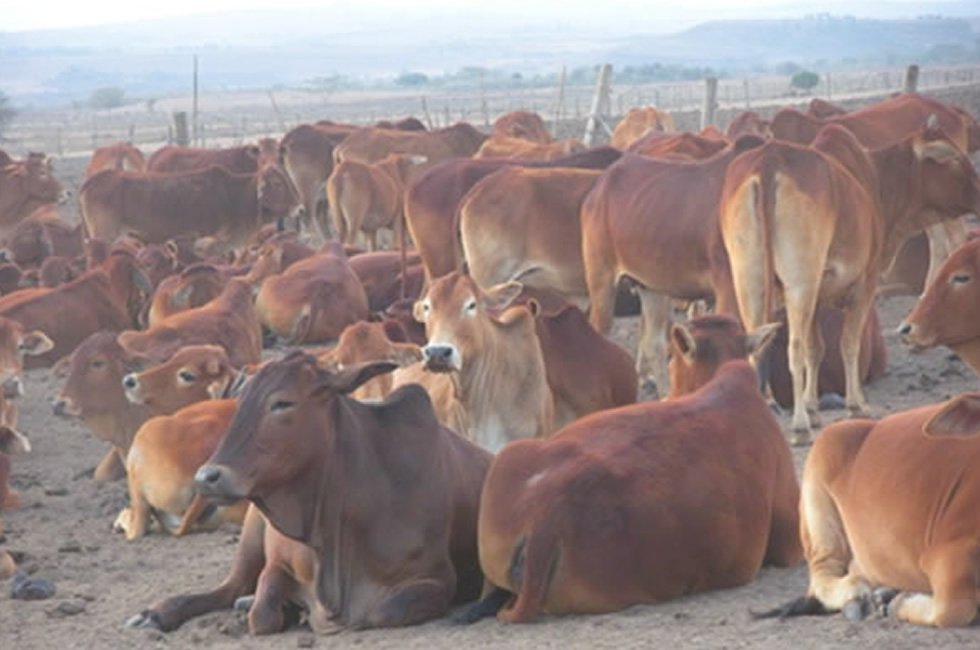
Animal Welfare Resource Web portal Launched
The Food and Agricultural Organization (FAO) has inaugurated a new internet portal expected to serve as a one-stop-shop for individuals and organizations searching for the latest information about the welfare of livestock.
The Gateway to Farm Animal Welfare is designed to provide a reliable information conduit on legislation and research findings in the sector, as well as on animal welfare standards, practices and policies.
The web is expected to benefit farmers and government officials, lawmakers, researchers, the livestock and food industry and non-governmental organizations.
It will provide an important forum for animal welfare issues related to activities such as transport, slaughter and pre-slaughter management, animal husbandry handling and the culling of animals for disease control.
Livestock production accounts for 40 percent of the value of world agricultural output and products of animal origin provide one-third of humanity’s protein intake.
Animals also contribute income, social status and security to roughly one billion people, including many of the world’s poor.
Since the 1990s, the centre of gravity for livestock production has moved from north to south and a few developing countries have emerged as powerful new players on the global scene.
The development is set to improve animal health, increase livestock production and response to natural disasters where animals are involved as the portal meets a real information need in this extremely important area.
By giving less economically developed country governments, professionals and producers online access to the latest information and the opportunity to contribute information relevant to their own situation, the portal will help to improve livestock welfare, health and productivity worldwide.
Compliance with animal welfare standards can open access to international markets for products from less economically developed countries.
The portal that will also offer on-line conferences and seminars, has been developed in collaboration with key international partners in animal welfare.
Overgrazing Threatening Elephant Populations
In Kenya for the last few years, pastoral communities have had to endure losses worth thousands of dollars as long famine spells persisted. With scarce water and little pasture having been consumed by the scorching sun in the semi arid areas, pastoral communities witness their livestock starve until they drop dead.
As a result of this painful experience, the pastoralists had to think of viable survival means, which led them to the expansive wildlife ranches and reserves with plenty of grass. The danger from wild animals to the herders and their livestock was far outweighed by the much needed pasture.
The well fed livestock have reproduced and their population in this ranches and reserves increased leading to overgrazing. Though livestock has survived, the overgrazing has occasioned a new threat to the survival of other wild animals.
According to a new study published in an online journal, overgrazing by livestock poses a greater danger to elephants more than poaching. The six year study published in the Proceedings of the National Academy of Sciences suggests that climate change and human encroachment on wildlife space are threatening the already endangered elephant.
Thure Cerling, leader of the study carried out by the University of Utah says, “Fifteen years ago, there was a lot of poaching in the area, and elephants were getting killed, but since then, security has improved considerably, so people are moving in with cattle. Now there’s a suggestion the elephants are finding it harder to compete with the cattle than with the poachers.”
Following a family of three elephants in the Samburu and Buffalo Springs national reserves the team found that for the animals to reproduce, they need to alternate between eating a diet of grass and shrubs.
Two weeks after the rains begin, an elephant, the study says, usually switches to a grass diet to bulk up for pregnancy and birth. But the team observed that when seasons changed and there was prolonged drought or livestock had fed on the early grass, the elephants did not conceive.
The study also showed an intricate interplay in the timing of the rainy season, the growth of grass and when the elephants breed and give birth.
Five weeks after the rains start, when the proportion of grass in the elephants’ diet reaches maximum levels, females in the 800-member Samburu-Buffalo Springs elephant population are most likely to conceive.
The elephants give birth 22 months after conception, with the peak of births just in time for another rainy season to provide water and grass for offspring.
According to Cerling, the study leader “It is clear that the grass provides nutrients that the elephants presumably need for successful reproduction,”
The jumbo: Prized Ivory Still its Curse
A latest conservation study notes 681 of 701 elephant tusks sold in the US in 2007, came from Africa. The Study titled Ivory Markets in the US by conservationists Esmond Martin and Daniel Stiles say the quantity could be higher as it is difficult to track down the movement of ivory from Africa. Zimbabwe took the lead followed by Tanzania, South Africa and Botswana.
“Tusks from Africa are first sent to a third country; tracking the movement is very difficult,” says the report. This is the latest published data since the Convention on International Trade in Endangered Species of Wild Fauna and Flora (CITES) conference in The Hague, The Netherlands, allowed the Southern African elephant range states a one-off sale of their ivory stockpiles in 2007.
The partial downgrading of the elephant from the category of species threatened with extinction is perceived to have triggered an upsurge in poaching. However, going by recent developments in Kenya, the threat against the Jumbo’s does not stop there.
According to Kenya Government records, regions where Chinese contractors are building roads are prone to poaching. The Chinese embassy in Kenya complained of perceived ethnic profiling of their nationals following information by wildlife authorities in Kenya estimating that foreign contractors killed 80 elephants last year. Apart from China, other Ivory leading markets in the world include Japan and the US.
The upsurge in poaching is also blamed on lax surveillance and porous borders with Tanzania. “We have difficulties in protecting our wildlife species, especially the elephant and the rhino. Tanzania lacks the equipment and technical know-how to track their stocks. They are also indifferent to appeals for joint operations in game parks to keep poachers off. They believe their elephant stocks are stable, but their rhino numbers have declined to less than 40, which speaks volumes about the level surveillance,” a Kenya wildlife security officer, who declined to be identified, said.
Read More